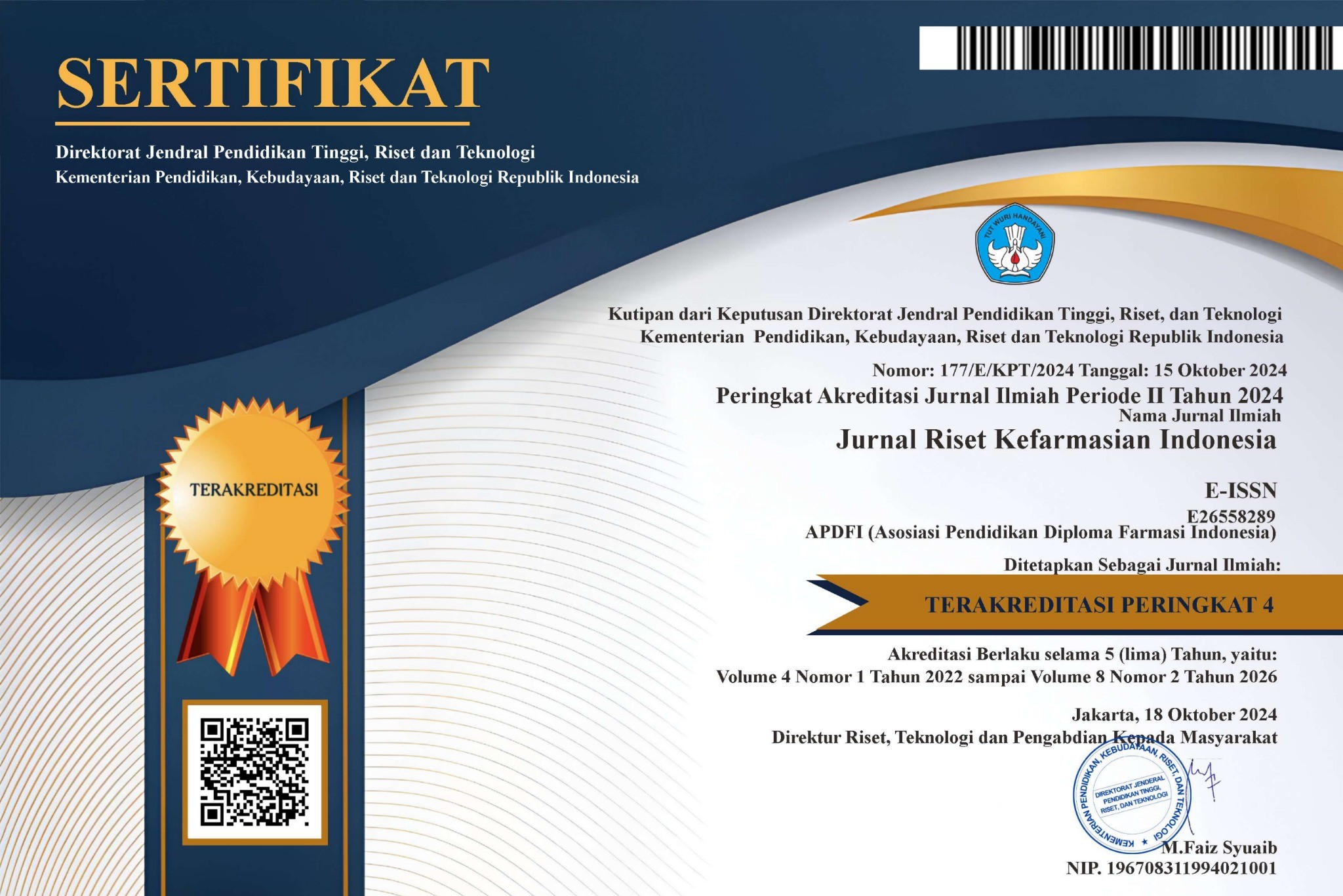
ANALISIS EFEKTIVITAS BIAYA METODE KB DAN KUALITAS HIDUP AKSEPTOR DI PUSKESMAS LOA JANAN
DOI:
https://doi.org/10.33759/jrki.v4i2.237Keywords:
Cost-Effectiveness Analysis, IUD, Injection contraceptive, Oral contraceptive, Loa Janan Health CenterAbstract
Family Planning (KB) is a national scale program to reduce birth rates and control population growth in Indonesia. Family planning has three phases. The first phase is the phase of delaying/preventing pregnancy. The second is the phase of spacing out pregnancies, and the third is the phase of terminating/terminating pregnancy/fertility. The use of contraceptives in family planning is an effort to prevent pregnancy. The most common contraceptive methods are the pill, injection, and IUD. The purpose of this study was to determine the cost-effectiveness of the use of oral contraceptive pills, contraceptive injections, and IUD at the Loa Janan Health Center. This study used a sample of 42 acceptors. The average cost of injection contraceptives is (Rp 25,000), pills (Rp 15,000), IUD (Rp 107,000) and the effectiveness of injection contraceptives (0.95%), pills (0.857%), and IUDs (0.867%). The ACER (Average cost-effectiveness ratio) value of injection contraceptives was Rp. 26,315, and 75% of the acceptors had an average quality of life. The ACER value of the pill was Rp. 17,502, and 85.7% of the acceptors had a good quality of life, the ACER value of the IUD was Rp. 123,414, and 60% of the acceptors had a good quality of life. The Pill-Injection's ICER (incremental cost-effectiveness ratio) value is Rp. 107,526. The ICER of IUD-Injection is Rp. -987,951, and the IUD-Pill (Rp.9,200,000). Hence, oral contraceptive gave a good quality of life and is more cost-effective than contraceptive injection and IUDs.
Keywords: Cost-Effectiveness Analysis, IUD, injection contraceptive, oral contraceptive, Loa Janan Health Center
Downloads
References
Budiarti, I., Nuryani, D. D., & Hidayat, R. (2017). Determinan Penggunaan Metode Kontrasepsi Jangka Panjang (MKJP) pada Akseptor KB. Jurnal Kesehatan, 8(2), 220-224.
Dinkes Provinsi Kaltim. (2015). Profil Kesehatan Provinsi Kaltim Tahun 2014. Dinas Kesehatan Provinsi Kaltim.
Dinkes Provinsi Kaltim. (2019). Laporan Kinerja Instalasi Pemerintah Tahun 2019. Dinas Kesehatan Provinsi Kalimantan Timur.
Farina, A. M. N. F., & Susilowati, E. (2017). Analisis Faktor-Faktor Yang Berhubungan Dengan Pemilihan Alat Kontrasepsi KB suntik oleh Akseptor KB di Desa Kedungglugu Kabupaten Nganjuk. Repository.Poltekkespim.Ac.Id, 1–10.
Hanun, R. F. El, Aziez, I., & Luthfi, H. M. (2021). Analisis Efektivitas Biaya Metode Kontrasepsi Pil dan Suntik untuk Akseptor KB Mandiri Di Puskesmas Tonjong. 1(1), 6–11.
Hartanto, H. (2015). Keluarga berencana dan kontrasepsi. Pustaka Sinar Harapan.
Hidayat, M. A. (2018). Cost-Effectiveness Analysis Penggunaan Antibiotik Untuk Pasien Rawat Inap Demam Tifoid Di RSUD Bangil Tahun 2016. Skripsi,Fakultas Kedokteran, Universitas Islam Negeri Maulana Malik Ibrahim Malang, Malang.
Khadijah, S. (2018). Upaya deteksi dini resiko tinggi kehamilan ditentukan oleh pengetahuan dan dukungan tenaga kesehatan. Jurnal Sehat Mandiri, 13(1), 27-34.
Kementerian Kesehatan RI. (2020). Profil Kesehatan Indonesia Tahun 2019. Kementerian Kesehatan RI. Sekretariat Jenderal.
Mahmudi. (2015). Manajemen Kinerja Sektor Publik. Unit penerbit dan percetakan sekolah tinggi ilmu manajemen YKPN.
Refasi, N. L., Lolo, W. A., & Bodhi, W. (2018). Analisis Efektivitas Biaya (Cost Effectiveness Analysis) Pada Pengobatan Pasien Malaria Falciparum Di Rsud Nabire. Pharmacon, 7(2), 1–9. https://doi.org/10.35799/pha.7.2018.19365
Septalia, R., & Puspitasari, N. (2017). Faktor yang Memengaruhi Pemilihan Metode Kontrasepsi. Jurnal Biometrika Dan Kependudukan, 5(2), 91–98.
Setiadi. (2013). Konsep dan Praktik Penulisan Riset Keperawatan. Graha Ilmu.
Setiawan, D., Endarti, D., & Suwantika, A. A. (2017). Farmakoekonomi Modeling. UM Purwokerto Press.
Sugiyono. (2012). Metode penelitian pendidikan pendekatan kuantitatif, kualitatif dan R&D. Alfabeta.
Sugiyono. (2017). Metode penelitian pendidikan pendekatan kuantitatif, kualitatif dan R&D. Alfabeta.
Sumawan, I. W., & Ernawaty. (2006). Cost Effectiveness Analysis Metode Kontrasepsi IUD , Suntik dan Pil dengan Pendekatan Quality of Life. Journal Unair, 1(1998), 27–32.
Susanti, S. (2021). GAMBARAN KOMPLIKASI PERSALINAN PADA IBU HAMIL DENGAN FAKTOR RESIKO USIA TERLALU TUA DI PUSKESMAS CISAYONG KABUPATEN TASIKMALAYA. Journal of Midwifery and Public Health, 2(2), 91-96.
Widarjono, A. (2019). Statistika Terapan dengan Excel dan SPSS. UPP STIM YKPN.

Downloads
Published
Issue
Section
License
Articles published in The Jurnal Riset Kefarmasian Indonesia (JRKI) are licensed under the Creative Commons Attribution-NonCommercial-ShareAlike 4.0 International License (CC BY-NC-SA 4.0).
This license permits users to copy, redistribute, share, translate, adapt, and build upon the published material for non-commercial purposes, provided that appropriate credit is given to the original author(s) and the journal, a link to the license is provided, and any changes made are clearly indicated.
If users remix, transform, or build upon the material, they must distribute their contributions under the same license or a license permitted by the applicable ShareAlike terms.
The material may not be used for commercial purposes under this license without additional permission from the relevant copyright holder.
Authors retain copyright of their published works and grant The Jurnal Riset Kefarmasian Indonesia the right of first publication.
Full license terms are available at: https://creativecommons.org/licenses/by-nc-sa/4.0/